2023 Mitsubishi Review & Test Drive
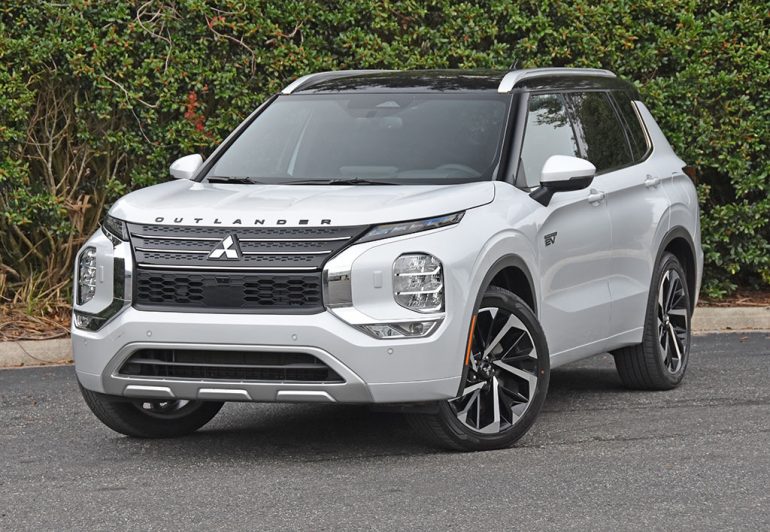
Plug-in Hybrid Electric Vehicles (PHEV) have been a force to help bridge a gap as we approach a future full of full-on electric vehicles (EVs). Such vehicles have proven to be quite efficient and the perfect commuter vehicle for those who take full advantage of its plug-in charging capabilities. In the scheme of having an affordable PHEV SUV, Mitsubishi has stepped into the game to bring us an all-new Outlander PHEV. After spending a week with the Outlander PHEV, I was enamored to welcome such a vehicle into my lifestyle with wide open arms from a brand that hasn’t been on my radar screen in a long time.

For my generation, born in the late 70s, Mitsubishi was a fun brand in the 90s and even in the early 2000s. I can remember good friends of mine having some of the wildest sport compact vehicles around that touted the Mitsubishi … Read more


The BMW 7-Series Edge As The i7 Is Today

 In 1977, The BMW 7-Series Was Just As Cutting-Edge As The i7 Is Today

by Sebastien Bell

Now that the seventh-generation BMW 7-Series has been revealed, BMW Group Classic thought that it was the perfect time to take a look back at the history of the model line. The department’s YouTube channel, then, has taken a look back at the very first generation of the car.

The 7-Series was the last model to get BMW’s new numerical naming conventions and was produced from 1977 until 1986 and the top-of-the-line 745i was powered by a big, beefy 3.2-liter inline-six when it was introduced.

That is not, however, 4.5-liters, as the model name would suggest. The hosts explain, though, that’s because the engine was turbocharged, and by BMW’s math, it produced the same amount of power (248 hp/185 kW/252 PS) as a naturally-aspirated, 4.5-liter engine.

Read: This Guy Loves Old BMW 7 Series Models So Much That He Owns 15 Of Them

 In 1977, The BMW 7-Series Was Just As Cutting-Edge As The i7 Is Today

Proving that BMW was … Read more

Less Reliable Than Gas-Powered Cars

Electric vehicles (EVs) have fewer moving parts than gas-powered cars. That mechanical simplicity, advocates say, should lead to fewer part failures — and more reliable vehicles — over time.

The logic behind the argument is sound. But the numbers aren’t yet proving it true, according to Consumer Reports.

CR comes by its data differently than most reliability studies.

The magazine doesn’t test every car on the market. Instead, it asks its readers to report problems they’ve had in the last 12 months, then compiles the results for vehicles built since 2000. As a result, its data set is limited to the cars CR subscribers own.

RELATED — Consumer Reports: Toyota, Lexus Make the Most Reliable Cars; Mercedes the Least

That data collection method skews the outcome. The subscriber to a magazine that ranks vacuums for price effectiveness may have different preferences than the average shopper.

Its 2022 data, CR says, … Read more